

- Author
- Maurine Rensonnet
- Date
- 14.09.2026
- Reading time
- 5 min
- Categories
- Technical case
- AI

GA4 & Traffic IA: Practical guide
Google just leveled up GA4 so you can track AI-driven site traffic with ease. The feature ships as the “New AI Assistant traffic measurement” group, a fresh channel bucket that flags visits from LLMs Google recognizes (ChatGPT, Gemini & co).
GA4: the AI Assistant channel
No earth-shattering news here: the data was always in the mix, just buried under the “referrals” blob. If your site pulls in heavy LLM traffic, good luck untangling it.
Where to look? Dive into Acquisition > Traffic Acquisition or User Acquisition. The channel sits under “AI Assistant,” probably behind organic or referral traffic.

To spot the LLM behind the visit, add “Session source” as a secondary dimension and filter the report on “Session default channel group” = “AI Assistant” or “Session medium” = “ai-assistant”.

So why care? You can now slice, dice, and compare this traffic against every other source, especially on quality metrics:
- engagement rate;
- key events;
- session key event rate;
- the value of key events, if you tagged them (automatic for an
- e-shop, set up everywhere else).
Use these metrics to fine-tune the source and boost site performance.
Three settings to lock in before you look at the numbers
- Retroactivity
The feature launched on May 13, 2026, and, like most Google Analytics releases (except the latest one, more on that in the next newsletter), it is not retroactive. You’ll wait months for meaningful data. Workaround: build a manual channel group for pre-flip data, following Julius Fedorovicius’ steps on Analytics Mania. Name it something else, like “Chatbot referrals,” to avoid confusion. GA4’s list of recognized chatbots remains murky; no one knows it for sure.Pro tip: annotate the switch date in GA4. Skip this step and your next six months of channel trends, including Referral, will look broken as traffic shifts to AI Assistant. - Quick access
Need the numbers fast? Build a custom Exploration report (try “AI assistant traffic”) or drop a prebuilt template into your GA4 report library. - Audience dedicated
Create a dedicated audience targeting users whose “First user default channel group” = “AI Assistant” to analyze their behavior (top pages, key events, etc.).
What we see across more than 40 properties
The web went nuts over jaw-dropping conversion rates, so we decided to stress-test our own data.
We checked 40+ GA4 properties managed by EPIC, across every industry and site type (showcase website, e-shop, career page, landing page, and more). The numbers tell a different story.
First finding: traffic under the “AI Assistant” channel stays niche, about 2% on average, peaking rarely at 5–6%.
Those 2% are just the tip. Google’s “AI Overviews” clicks still sit in organic. Mobile apps (ChatGPT, Claude…) that mask their origin, plus copied-and-pasted links, 60 to 70% of AI-driven visits actually land in the “Direct” bucket per various studies (the elusive “Dark AI Traffic”).
That 2% is a floor, not the full picture. Real AI traffic is likely two to three times higher, and that’s before we even count Zero-Click Search impressions (when the AI mentions you but never sends a click).
Now here’s the kicker: engagement rate, key event rate, and value all hit at least the site average, often way higher. Some KPIs even blew us away, with key event rates 3x higher than organic.

This isn’t a volume game; it’s about nailing the sweet spot of low volume, ultra-qualified traffic. The way users interact with AI before hitting your site explains it all.
Our take on engagement rates
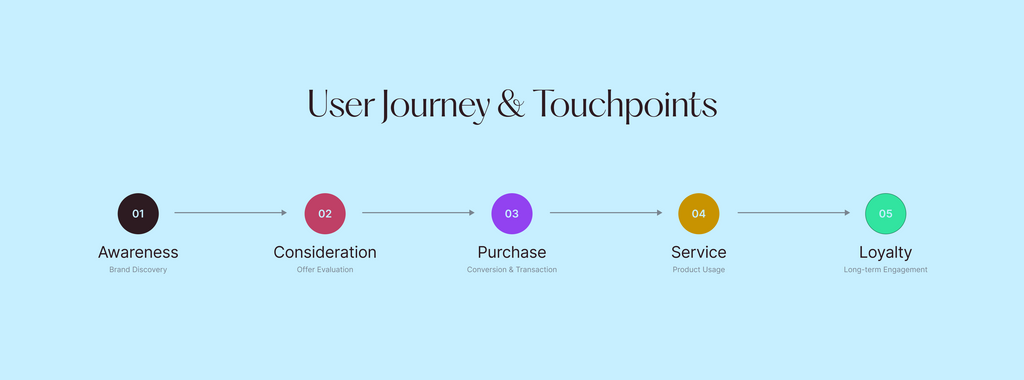
In our view, LLMs are the first digital channel that compares and prescreens options for users, then sends people to your site who’ve never heard of you but are already far along in their journey.
While legacy digital channels own one step of the funnel, Claude analyzes the need, benchmarks unbranded alternatives, then serves a done-deal recommendation: “I’ve done the analysis, I recommend this brand, and here’s what to look for.”
Awareness and consideration merged into one step, right at first touch. The visitor lands informed and intent-driven.
One catch: your site data must be accurate and complete, because that’s the fuel for the comparison.
Since LLMs still enjoy a reputation as impartial third parties (biased, sure, but not supposed to favor one brand over another), their advice carries extra weight.
For now. Ads are coming, and that neutral halo might not survive the onslaught.
What GA4 won’t tell you
Naturally, a flood of questions hits fast:
- “Which prompt drove a click to my site?”
- How many times did my brand get mentioned without a single click?
- How do I monitor and optimize that traffic?
GA4 shows traffic sources and performance, then stops. The feature is new, so much traffic still slips through the net.
Over in Search Console, Google has dropped a view that isolates AI Overviews visibility. We’ll tackle that beast in a future post; the feature is still too beta for prime time.
When it comes to content optimization, we still believe GEO is just SEO with a twist. Our buddies at HeySquad agree; check out Jérôme’s piece if you have a few minutes.
Until AI models open up about their sources and citation algorithms, GEO optimization stays in the lab, a steady game of trial and error.
The LLM universe is already fragmented. Google still dominates traditional web search in the West, but LLMs are popping up everywhere. Don’t hold your breath for a Search Console equivalent in GEO; you’ll probably juggle many tools instead.
Measuring AI visibility: three tracks
Still, a few cool tools are popping up, worth a look for tracking that elusive “Zero-Click Search.”
Quick caveat: these tools don’t actually count impressions. They loop prompts and check if your brand pops up. It’s sampling, not measurement. That’s why two tools rarely spit out the same score.
Full disclosure: we haven’t stress-tested every single one at EPIC. This is a market snapshot, not a lab report.
Already paying for Semrush or Ahrefs? Start there. Semrush AI Toolkit (add-on, about $99/month) and Ahrefs Brand Radar (free tier, then about $129/month) are less deep than dedicated tools, but they give you SEO + AI in one place, no extra login needed. For getting started, that’s plenty.
Want more? Time for pure-play GEO tools. Otterly.ai (from $29/mo), Peec AI (about €85/mo, sweet spot for SMEs), Profound (from $399/mo, enterprise tier). Multi-LLM tracking, voice share, competitive analysis. One must-check criterion: confirm Google surface coverage. Every vendor shoves ChatGPT in your face because everyone recognizes the name, but if your queries mostly trigger AI Overviews, you’re seeing half the picture.
Don’t want to pay a dime? No problem. Google Search Console, Bing Webmaster Tools for Copilot (Bing powers some ChatGPT and Copilot answers and the report is free), and GA4 for click data as mentioned earlier. It doesn’t cover everything, but it’s a solid starting point.
Start free, then pull the trigger on a paid tool only when you have a real list of prompts to track. Don’t fall into the three-dashboard graveyard; no one visits after six weeks.