
- Author
- Cyrielle Jacobs

- Date
- 14.09.2026
- Reading time
- 6 min
- Categories
- Branding
Branding for Start-ups & SMEs
A young organization has an advantage that big brands lost long ago: it can still lay the foundations before building.
At EPIC, we partner with start-ups and SMEs on strategy and brand identity. Every brief shows the same pattern. The product is nailed, often after months of work. The service is nailed, the price is set, and the first customers are already on board. Then, as an afterthought, they tack on the brand.
Makes sense, right? You test the market, see if the product sticks. But in that rush you drop the ball on the one thing a young company has that a behemoth never will: the chance to do things in the right order.
An advantage that fades as you grow.
A major brand that rebrands never starts with a blank page. It makes tweaks. Twenty years of entrenched perceptions, teams with their own ways of working, campaigns that still carry weight. On the other hand, it has the resources to adjust: to test, measure, and start again the following year if the first attempt fails.
A start-up or an SME has none of that, and that’s a blessing. Nothing is set in stone; there are no pre-existing perceptions to undo. The decisions taken now form the foundations of the project.
Brand strategy comes first: why you exist, who you serve, what you promise, what sets you apart. Identity follows. Substance, then style.
But the story still has to set the brand apart. Kantar measured this in August 2025: a company’s ability to command its price is 94 percent attributable to the perception of a significant difference, far ahead of brand awareness. Brands that nail it charge twice what the rest of the pack does. That’s why we study the market and the competition before we write a single line.
When the brand is the founder
In a start-up, the brand often rests on one person. Their energy, their contact list, their knack for explaining the project in three minutes at a trade fair. It works, sometimes remarkably well, and that’s what makes all the difference in the early years.
Then it hits a ceiling. A narrative that lives only in one person’s head is hard to delegate. You hire a team, and everyone spins their own version. You form a partnership, and the two visions clash. You try to hand over the reins, and there’s nothing to pass on.
Our first move is to listen, a step that takes longer than most people guess. The project’s real value already exists, but it lives in hard-to-share forms: convictions, hunches, anecdotes told a thousand times. Our job is to distill that into a narrative that lives beyond the founder and extends beyond the product.
Vibz is designing a smart wristband for live events. The project was based on eight technologies: synchronised LEDs, haptic feedback, geolocation, contactless payment, and so on. It was all true, but no festival organiser buys a list of components. Our workshops surfaced what the founders really wanted and gave it words: from tech to feeling. The product stayed the same. What changed was the story. We distilled it into a brand book with clear, punchy messages: turn every crowd into a live network.
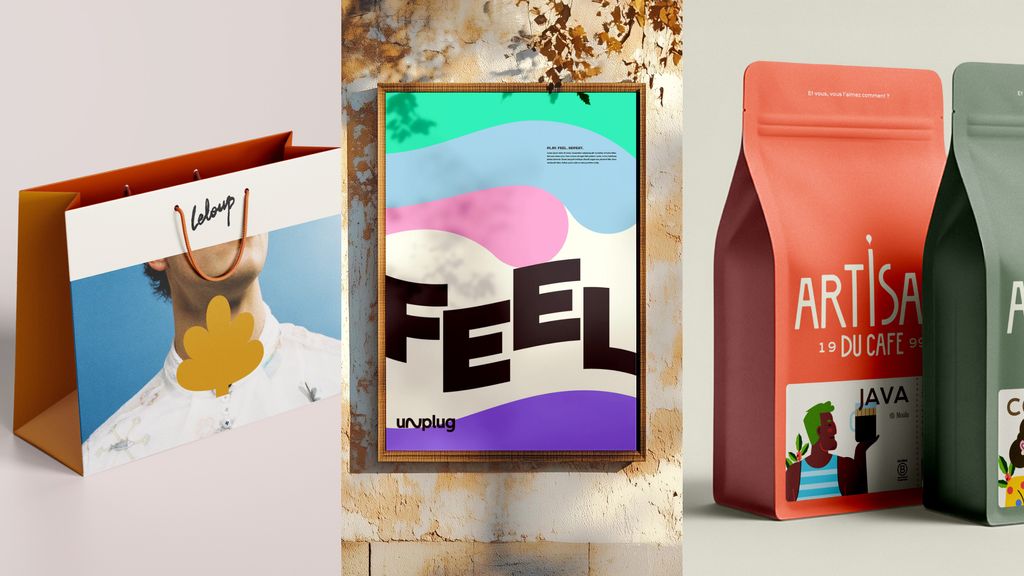
Artisan du Café in Verlaine shows the flip side. They’ve been roasting coffee since 1999, offer twenty-six beans, and draw customers from far and wide. The brand had never been spelled out; it lived only in the founders’ heads and in their counter-side advice. The handover to new owners exposed the missing shared language, not a marketing gap. When the torch must pass, the story can’t live in two heads alone.
An identity that stands on its own, yet is still flexible
When the pieces lock into place, clients often ask for “something pretty.” That’s fair, but it’s not the deciding factor. An identity is judged by its ability to support and embody the strategy: every color, every typeface, every photographic choice must be able to be linked to a decision made earlier in the process. When that link is missing, all that remains is window dressing, which becomes outdated as quickly as the trend that inspired it.
The second criterion is just as important, though clients rarely state it: an identity must evolve. A three-year project is never finished. It will expand its range, open new venues, refine its target audience, and sometimes make mistakes. A rigid brand guideline turns into a straitjacket, and people route around it after eighteen months. Our north star boils down to two linked demands: consistency and flexibility. We give a framework and a heading; we don’t lock down a project that’s still growing.
At Artisan du Café, the brand strategy hinges on two simple truths: freshness must be proven, and we help people find their coffee. The identity makes that clear. A family of illustrated characters represents consumer types, not origin stories. Each character represents a taste profile, so packaging can shift from product to product without hurting the brand. Labels carry an intensity scale, and a “fresh today” stamp notes the roast date right on the packet.
Guillaume Leloup, a freelance designer specializing in high-end menswear, pushes the idea further. His strategy puts material first: fabric matters more than trends, and each piece plays on contrast and texture. The brand identity grew a flexible system from that. Each collection gets its own color palette, patterns, and graphics, yet the overarching theme stays visible season after season. The brand doesn’t have to reinvent itself with every drop; it simply evolves.
Consistency isn’t something you just tack on at the end
A brand doesn’t live in a deck. It lives on a website, in a shop window, on a leaflet, on packaging, during a sales meeting, in a venue’s signage, and in the way an email is replied to. We call it the brand experience, and that’s where the work comes alive for customers. Brands that nail consistent experiences across every touchpoint enjoy 20 to 30 percent higher retention (McKinsey, 2020).
We stress this from day one, often in the first workshop, because consistency is set early and can fall apart fast. A start-up obviously can’t roll everything out at once, and nobody expects it to. It must pick its first building blocks, the ones that really matter, and get them right. We build them with the client.
Unplug is an indoor multi-activity center in a market where offerings are rapidly becoming standardized and new concepts are copied within a single season. We nailed the brand before the doors opened, when there was nothing to slap a logo on. The strategy fit one sentence: you come in for an experience, you leave with a story to tell.
She then locked in some very concrete decisions:
- Narrative-driven settings rather than simply adjacent rooms.
- A layout that whisks visitors from one world to the next.
- Copy that pops with action verbs and puts feel-good sensations ahead of spec sheets.
- The website, built soon after, follows the same playbook.
Why we love these projects
We also work with major brands, and it’s a fascinating line of work. But with a start-up or an SME, there’s nowhere to hide. No hollow branding strategy holds water when faced with someone who’s put their life savings into the project. And that’s a good thing: it forces us to articulate genuine motivations rather than just spout empty rhetoric.
One month it’s a solo founder who’s kept her project alive for 20 years and is now teaming up with a new partner. The next it’s a school of a thousand students aged 2½ to 18 who just want to speak with one voice.
And then comes the moment, in every project, when the people behind it finally recognize themselves in something we’ve built together. It rarely happens during a polished presentation. More like in a workshop, on the third round of back-and-forth, when someone blurts, “There you go, that’s exactly it, but I’d never have been able to put it into words.”
A brand always gets defined, either by the stakeholders or by the market. Until we nail it, competitors, customers, and industry conventions will do the job. Let’s beat them to it.
Sources: Kantar, ‘What if price, not volume, is your biggest growth opportunity?’, Jorge Alagon and Mary Kyriakidi, August 2025; McKinsey, 2020, on consistency of the customer experience across touchpoints. Case studies: Vibz, Artisan du Café, Guillaume Leloup, Unplug.